Data foundations
Master data: the unglamorous foundation of every AI use case
Before you ask what AI can do with your data, ask whether your data knows who your customers are.
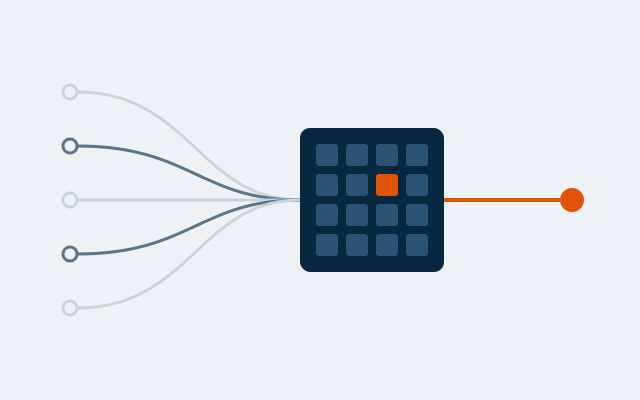
Ask a leadership team about their AI ambitions and you'll hear about forecasting, churn prediction and AI agents that handle customer questions. Ask how many customers the company has, and you may get three different answers. That second question matters more than it seems.
Why AI makes the problem bigger
A report built on messy data is wrong in a way people can see. A sales manager spots a duplicate customer and works around it. AI doesn't. A model trained on duplicated or inconsistent records learns the wrong patterns and then presents them with confidence. An AI agent that pulls a customer's history from three conflicting records gives an answer that sounds right and isn't.
In other words, AI doesn't fix poor master data. It scales it.
What good master data looks like
Master data is the shared reference information the business runs on: customers, products, suppliers, the chart of accounts. Getting it right comes down to a few basics:
- One definition. Agree what a "customer" is: a legal entity, a site, a billing account? Most confusion starts here.
- One golden record. Each customer, product or supplier exists once, with a unique ID that every system uses or maps to.
- Clear ownership. Every data domain has a business owner who decides on definitions and quality rules, and data stewards who keep it right day to day.
- Quality you can see. Track a handful of measures, such as duplicates, missing key fields and records without an owner, and publish them.
How to start without a multi-year programme
Master data projects have a reputation for being slow and expensive. They don't have to be.
- Start from a use case. Pick one AI or analytics use case that matters, such as a revenue forecast or a single customer view for sales, and fix the data it needs first.
- Fix at the source. Cleaning data in the warehouse helps for a while. Lasting quality comes from correcting it where it is created, with validation in the CRM or ERP.
- Consolidate step by step. Companies with several ERP or CRM systems rarely need a big-bang migration. A shared customer ID and a mapping layer already deliver one source of truth for reporting and AI. At Solmax, this is how we brought reporting from five ERP systems into one governed data warehouse.
- Make quality part of the routine. A monthly data quality review with the business owners keeps it from drifting back.
The bottom line
Master data will never be the exciting part of an AI strategy. But it decides whether that strategy delivers. The organisations that invest in it quietly now will be the ones whose AI can be trusted later.
Read next
Let's talk.
About a role, an advisory question or a workshop for your team on data, analytics, AI and FP&A.